


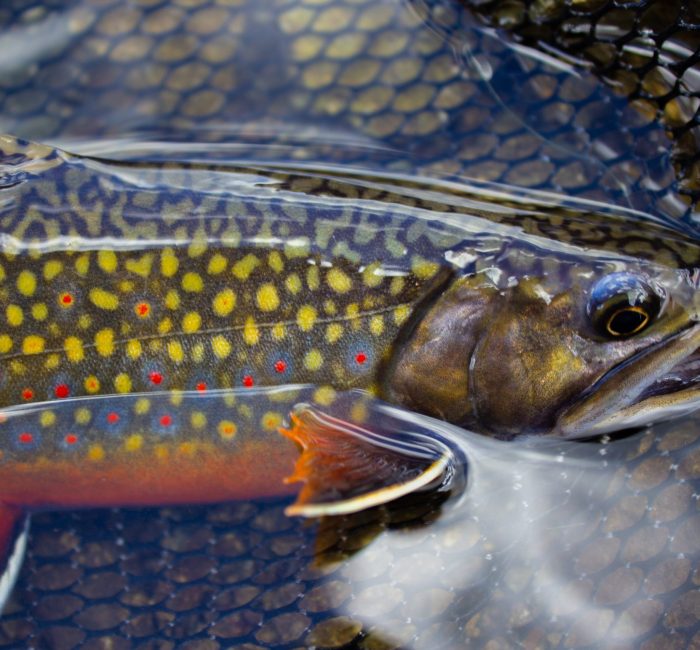
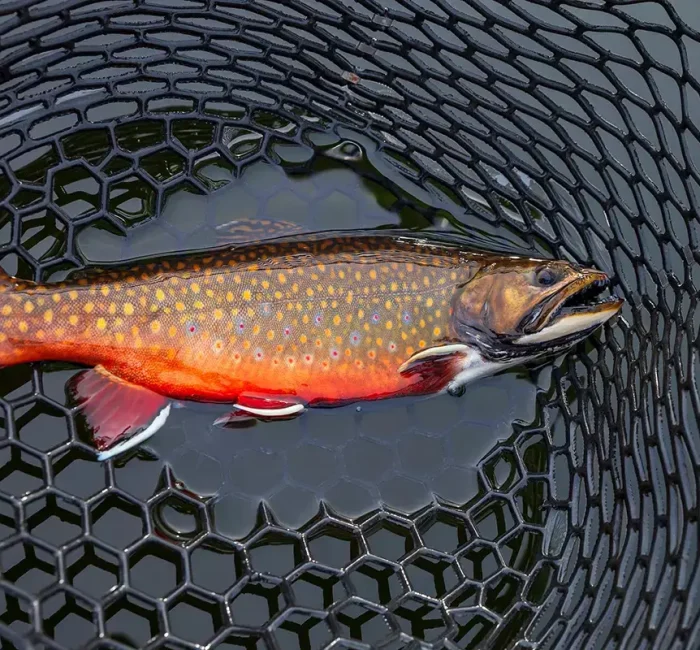
No freshwater fish in Patagonia stops an angler in their tracks quite like a brook trout held at the water’s edge for the first time. The coloration is extraordinary and genuinely unlike anything else in the system, orange-red spots haloed in pale blue, fins edged in white and black, and worm-like markings across the back that seem almost painted rather than natural. They are smaller than the browns and rainbows found in the same drainage, but they make up for the size difference many times over in visual impact. Pointer Fly Fishing encounters brook trout as part of the full Patagonian trout program at both Neuquén and Chubut properties, found in the coldest, highest-altitude sections of the river systems where few visiting anglers ever think to look.
The brook trout is technically not a trout at all. It belongs to the char family alongside lake trout and Arctic char, which is part of what gives it the extraordinary coloration that distinguishes it immediately from the browns and rainbows it shares Patagonian water with. Introduced to the cold, high-altitude sections of the Andean river systems alongside the other salmonids in the early twentieth century, the brook trout has established itself in the coldest, purest water available—the mountain streams and high-altitude creeks where summer water temperatures remain low enough to support it throughout the season.
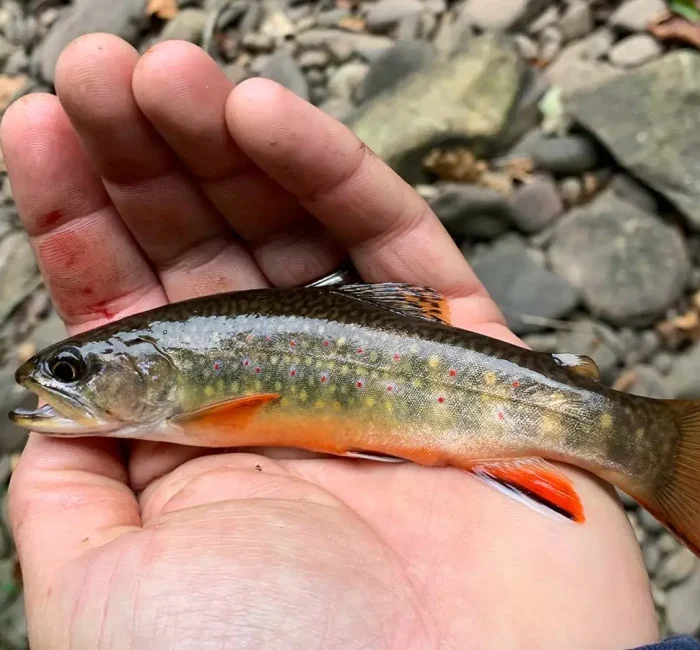
The coloration of a wild brook trout in peak condition is genuinely arresting. The back is covered in worm-like markings called vermiculations in dark olive and black. The flanks carry a constellation of pale yellow and red spots, each red spot haloed in pale blue, against a background that shifts from olive to gold to deep amber toward the belly. The belly itself flushes bright orange-red in spawning condition. The fins are edged in white and then black before transitioning into the body color, creating a pattern so precise it appears almost painted. Holding one briefly at the water’s edge before release is one of those moments in fly fishing that has nothing to do with the size of the fish.
In Patagonia, brook trout are found primarily in the smaller tributary streams and high-altitude creek systems that feed the main rivers. They are fish of cold, fast, clean water, and their presence is a reliable indicator of exceptional water quality. They are generally smaller than the browns and rainbows of the main rivers, typically ranging from six to sixteen inches, but they are wild fish in wild places, and the experience of pursuing them has a character entirely its own.
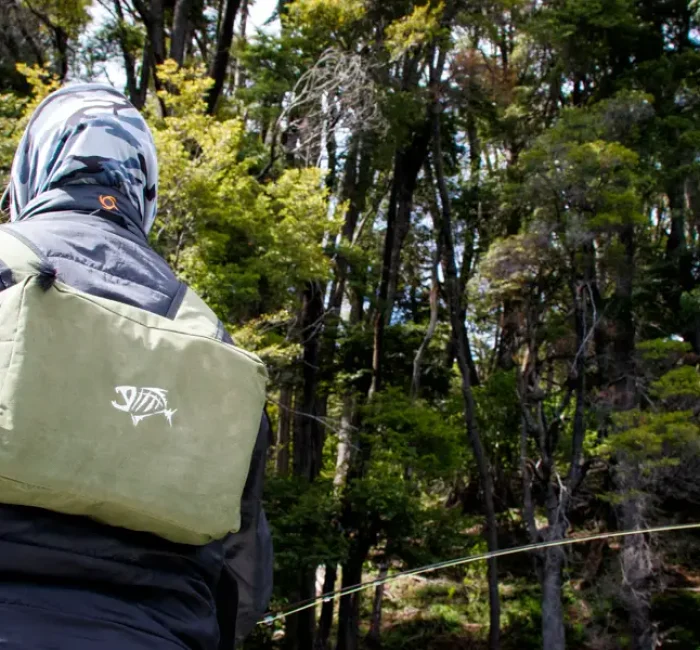
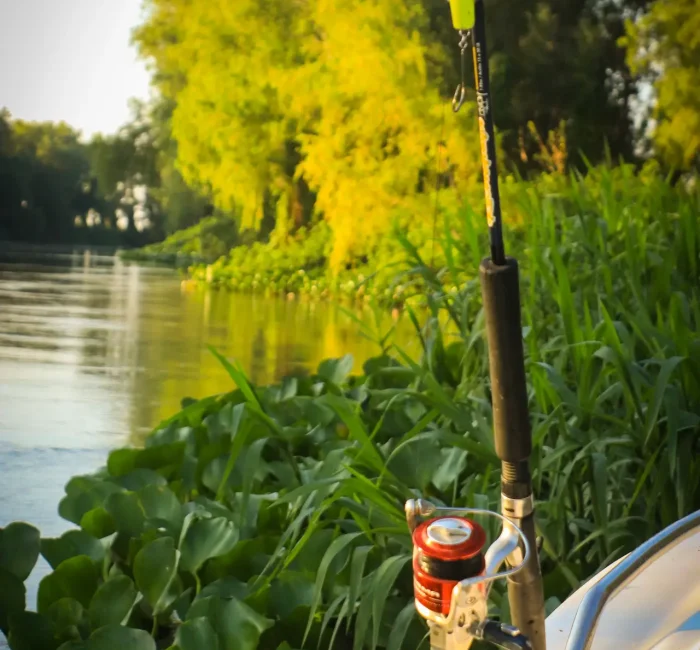
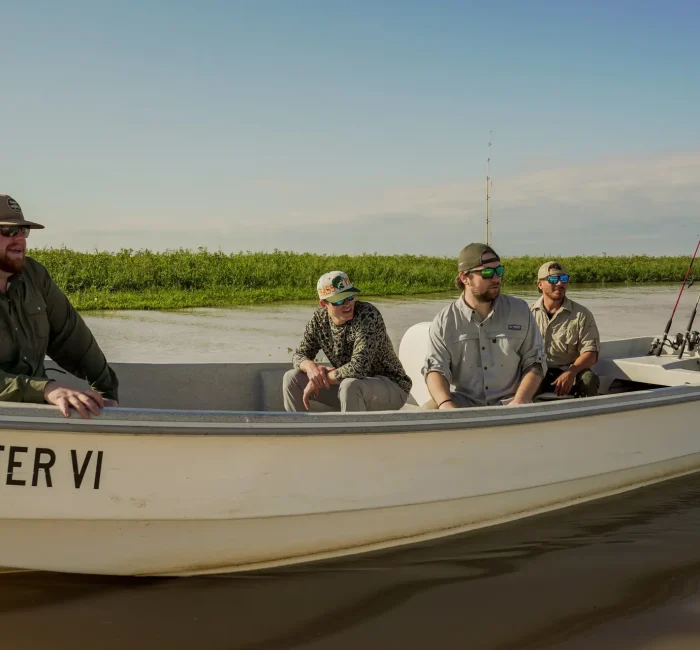

Brook trout occupy a very specific niche within the Patagonian river system. They require the coldest and most highly oxygenated water available and are found most consistently in the small tributary creeks and high-altitude streams that many visiting anglers pass on their way to the larger rivers. That sense of discovery is part of what makes brook trout fishing so rewarding. While the main river attracts attention, the small mountain creek winding through the beech forest often holds brook trout that have seen very little fishing pressure.
The fishing environment itself is as important as the fish. Small streams demand short casts, careful wading, and an approach that treats every pool and run as its own challenge. There is no long-distance casting here. Most presentations are made from only twenty feet away using roll casts or reach casts to avoid overhanging vegetation. A deliberate, patient pace rewards anglers willing to study each section of water before making a cast. The combination of spectacular mountain scenery, remarkably beautiful fish, and the satisfaction of reaching places few others fish creates an experience entirely different from the main river program.
Brook trout at Pointer Patagonia properties are encountered as part of the complete trout program rather than as the primary target. A day spent pursuing brown and rainbow trout on the main river may conclude with an hour on a tributary creek for brook trout, and the contrast between these experiences makes each one even more rewarding.
Brook trout are eager surface feeders in the small stream environment, making dry fly fishing the most natural and satisfying technique. Elk Hair Caddis, Parachute Adams, Royal Wulff, and other attractor patterns in sizes fourteen through eighteen consistently produce fish throughout the tributary creek systems. Success depends on the approach. Moving quietly, staying low, and using streamside vegetation as cover are just as important as the cast itself. When the presentation is right, brook trout strike immediately and enthusiastically, making even modest-sized fish exciting on lightweight tackle.
When trout are not feeding on the surface, nymphing through the pools and runs of the creek system provides dependable action throughout the season. Tight-line nymphing is particularly effective in these confined environments, allowing anglers to present flies accurately into small current seams while detecting strikes directly through the line. Small Pheasant Tail and Hare’s Ear nymphs in sizes sixteen through eighteen consistently produce results. The technical nature of small-stream nymphing makes it one of the most rewarding forms of fly fishing.
Brook trout respond best to lighter tackle than that used for the larger browns and rainbows of the main rivers. A three or four-weight rod paired with a fine leader ending in 5X or 6X tippet is ideal. The lighter equipment enhances the fight of even modest-sized fish while complementing the delicate presentations required in these intimate creek systems. Guides familiar with these waters tailor both their instruction and daily approach to the unique demands of small-stream fishing, creating some of the most memorable days in the Patagonian program.
The early season offers the finest brook trout fishing in Patagonia. Water temperatures remain at their coldest, fish are highly active, and spring hatches bring trout to the surface throughout the high-altitude creek systems. The vivid green lenga forests, combined with snow-capped peaks, make this one of the most visually spectacular periods of the year.
Brook trout remain available throughout the Patagonian summer in the coldest tributary streams where water temperatures stay low despite warmer weather. Fishing is most productive during the early morning when both water and air temperatures are coolest. Combining an afternoon on the main river with a late-day session on a nearby brook trout creek creates one of the most rewarding multi-species experiences in the entire program.
As water temperatures continue rising, brook trout retreat into the highest and coldest sections of the watershed, becoming progressively less accessible. During March, the focus at Maiten Neuquen shifts primarily toward brown and rainbow trout in the main rivers. Anglers whose primary interest is brook trout should plan their visit between November and February.
Pack layered, weatherproof clothing for Patagonia’s changing conditions and lightweight fly-fishing gear suited to small streams and rivers. Bring your own chest waders, sturdy wading boots, polarized sunglasses, sunscreen, insect repellent, and essential flies, as waders are not available for rental.
The high-altitude creek systems where brook trout live are often more exposed than the main river valleys. Wind and cold remain significant factors even during the height of summer, making layered clothing and dependable rain protection essential.
A three or four-weight rod between eight and nine feet is ideal for brook trout, while a five or six-weight rod is recommended for the main river sections of the trip. Bring a lightweight reel with a reliable drag, weight-forward floating line, leaders finishing in 5X or 6X, fine fluorocarbon tippet, Elk Hair Caddis, Parachute Adams, Royal Wulff, and other attractor dry flies in sizes fourteen through eighteen, Pheasant Tail and Hare’s Ear nymphs in sizes sixteen through eighteen, and polarized sunglasses for spotting fish in shallow water.
Waders are not available for rental at Patagonia properties. Bring your own quality stocking-foot chest waders, wading boots with felt or Vibram soles cleaned before travel, and footwear providing strong ankle support for rocky creek crossings.
Bring a Gore-Tex rain jacket, wind-stopper fleece, fleece vest, thermal base layers, long-sleeve quick-dry fishing shirts, quick-dry pants, warm hat, cap, fingerless gloves for early morning fishing, two pairs of polarized sunglasses, waterproof sunscreen with SPF 50 or higher, SPF lip balm, insect repellent, and a camera.
Brook trout are available as part of the complete Patagonian trout program at both Pointer Neuquén properties. They are encountered in the high-altitude tributary creeks feeding the main river systems and are most consistently found between November and February, when water temperatures remain cold enough to keep fish in accessible locations.
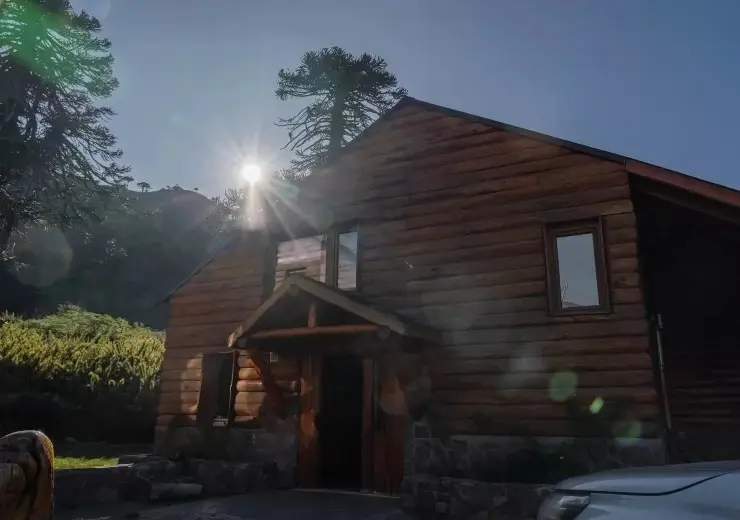
November to February | Brook Trout, Brown Trout & Rainbow Trout | 6 Nights / 5 Full Fishing Days | From $5,850 per person
Maiten Lodge Neuquén offers exceptional brook trout fishing in Patagonia, with access to high-altitude creeks and private rivers holding brook, brown, and rainbow trout. Guided wade fishing combines diverse waters in one trip. Guests bring their own waders, while returning visitors receive loyalty reward vouchers.

The extended southern Patagonia program at Maiten Chubut includes access to brook trout inhabiting the cold, high-altitude creek systems of Chubut Province during the November through February period. For anglers exploring the remote wilderness of southern Patagonia, brook trout add another memorable dimension to a fly fishing experience already defined by exceptional scenery and outstanding wild trout populations.
Orange-red spots haloed in blue. White-edged fins. Cold, clear mountain creeks in the Andes. The brook trout of Argentine Patagonia are encountered as part of the complete Patagonian trout program at Maiten Neuquen and Maiten Chubut, found in the high-altitude tributary systems where the water runs coldest and the fishing feels most remote. If a brook trout from a Patagonian mountain creek is on your list, reach out today and let us build the ideal program for you.
Fly Fishing Contact: Jazmin Caresani
Email: jazmin@pointeroutfitters.com
US Phone: +1 210 417 4065
Toll Free: 1-877-764-6822